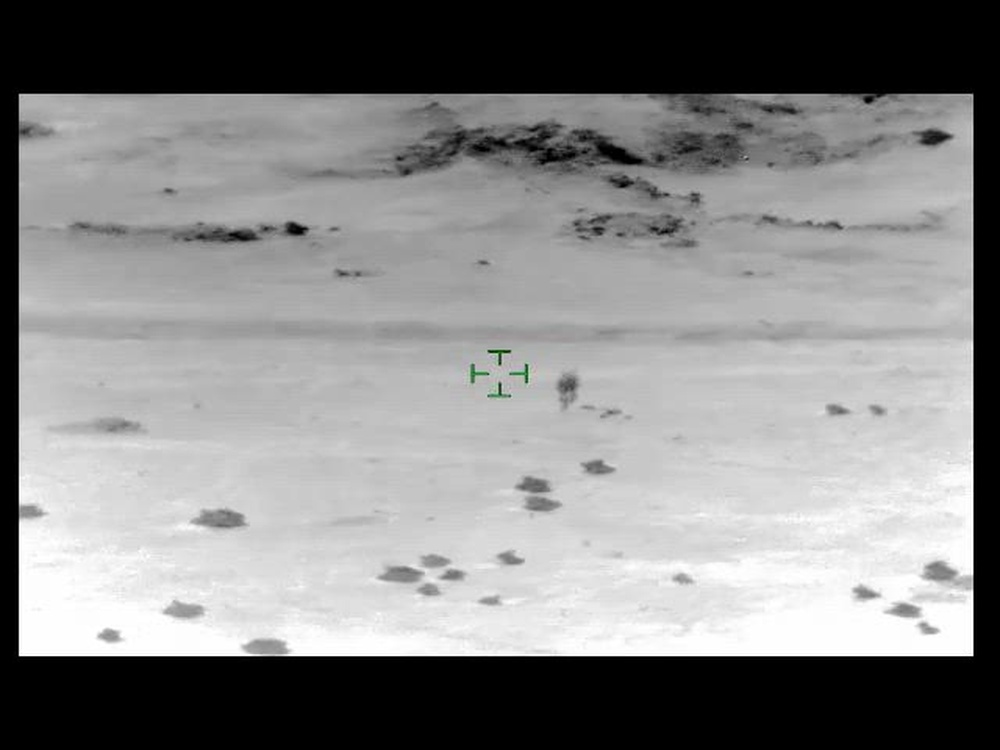
In October 2017, a force-protection aerostat near Al Taqaddum Air Base in Iraq recorded an unidentified object for about 17 minutes. A single infrared frame can make it look like a rigid object with appendages. The All-domain Anomaly Resolution Office’s case report reached a different conclusion after examining the changing shape, the sensor behavior and the winds.
Several frames show shapes consistent with fully and partly inflated balloons and what appear to be dangling strings. The number and shape of the visible strings change in the recording. Investigators interpreted that change as consistent with a cluster shifting relative to the sensor’s point of view. They attributed fluctuations in infrared brightness to the camera automatically redistributing grayscale values as the background changed, rather than to a change in the object itself.
The flight path was another check. AARO assessed with high confidence that the object was traveling east to west within the range of the winds. Its more specific estimates, 4–14 mph and an altitude of 850–2,200 feet, were only moderate-confidence because the available wind data varied. The agency’s high-confidence conclusion was that the object was consistent with a balloon cluster and did not exhibit anomalous behavior. That is not an identification of the balloons’ owner or launch site.
The DVIDS video record lets readers compare frames with the still. The distinction matters: the outline gets attention, but it was the changes across frames and the independent wind comparison that supported the explanation.
Featured image: Infrared video frame of the Al Taqaddum object, U.S. Department of Defense / All-domain Anomaly Resolution Office via DVIDS (public domain).
Leave a Reply