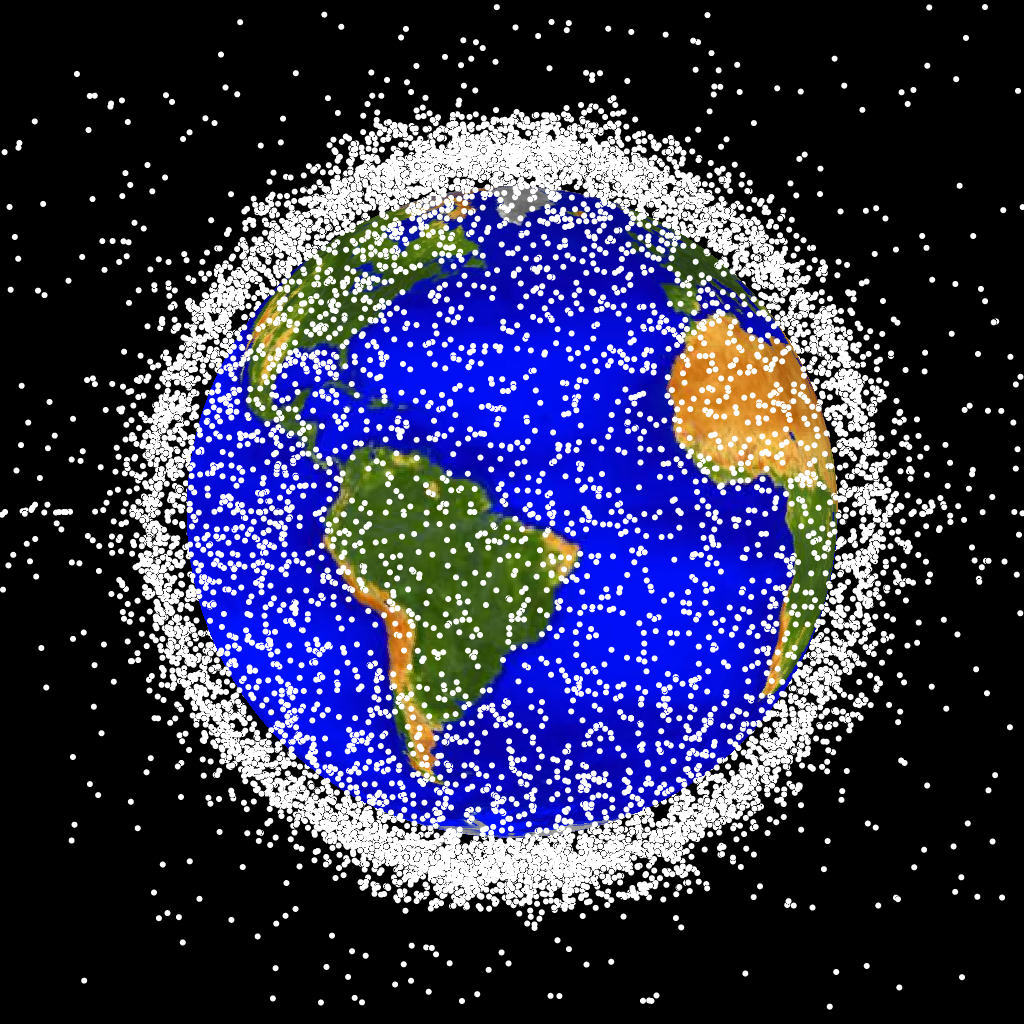
NASA visualization of tracked objects in low Earth orbit as of January 1, 2019; dots are enlarged and not to scale. Credit: NASA Orbital Debris Program Office. Image source.
A spacecraft launched on October 1 is preparing to examine satellites and rocket bodies that no longer function. NASA’s October 8 update describes SSPICY, the Small Spacecraft Propulsion and Inspection Capability mission, as a test of the technologies needed to approach and inspect such objects safely. Starfish Space’s Otter 24C spacecraft will attempt visits to as many as four inactive objects of U.S. origin in low Earth orbit, with inspections expected to begin in early 2027. The latest mission announcement sets out that timetable.
Inspection comes before intervention
SSPICY will observe each target’s rotation, orientation and surface condition. Those measurements could inform future decisions about servicing or disposal. For this demonstration, however, Otter will not touch or dock with the objects. Its job is to establish that a compact spacecraft can navigate between targets and collect useful close-range information using the integrated propulsion, sensing and control system.
That boundary is important. Launching an inspector is a step toward more capable orbital maintenance, but it does not mean an operational debris-removal service has already been demonstrated. The work ahead concerns controlled approaches and reliable measurements.
A spacecraft that makes approach decisions
The mission’s technical overview describes a 335-kilogram spacecraft with several cooperating technologies. Its CETACEAN navigation software uses imagery and other sensor information to determine a target’s relative position and motion. CEPHALOPOD guidance and control software uses that information to decide how to approach in stages, including when an abort is necessary.
An articulating robotic boom called Manta directs thrust, while electric propulsion allows the vehicle to move between orbits and carry out careful approaches. The same overview describes Nautilus, a docking mechanism intended for broader Otter capabilities, but explicitly excludes docking from SSPICY’s demonstration goals. Hardware that could support a future mission should not be confused with an action scheduled for this one.
Testing an integrated system in orbit
The October 1 launch report places Otter aboard SpaceX’s Transporter-18 rideshare mission from Vandenberg Space Force Base. SSPICY is expected to operate for about two years. It shared the launch with other NASA-supported technology and science spacecraft, illustrating how rideshares provide opportunities to test smaller missions in space.
The most useful results will arrive after launch: whether the spacecraft’s navigation, propulsion and decision-making work together around real inactive objects, and how much its inspections reveal about their condition. An unresponsive target cannot help an approaching visitor by adjusting its attitude or presenting a convenient docking point. Characterizing those complications is part of what makes inspection valuable.
For orbital-debris work, knowing what is there is only the beginning. Knowing how an object moves and what state it is in helps define what a later intervention could safely attempt. SSPICY’s contribution is to test that closer, more detailed view before future missions try to do more.
Leave a Reply